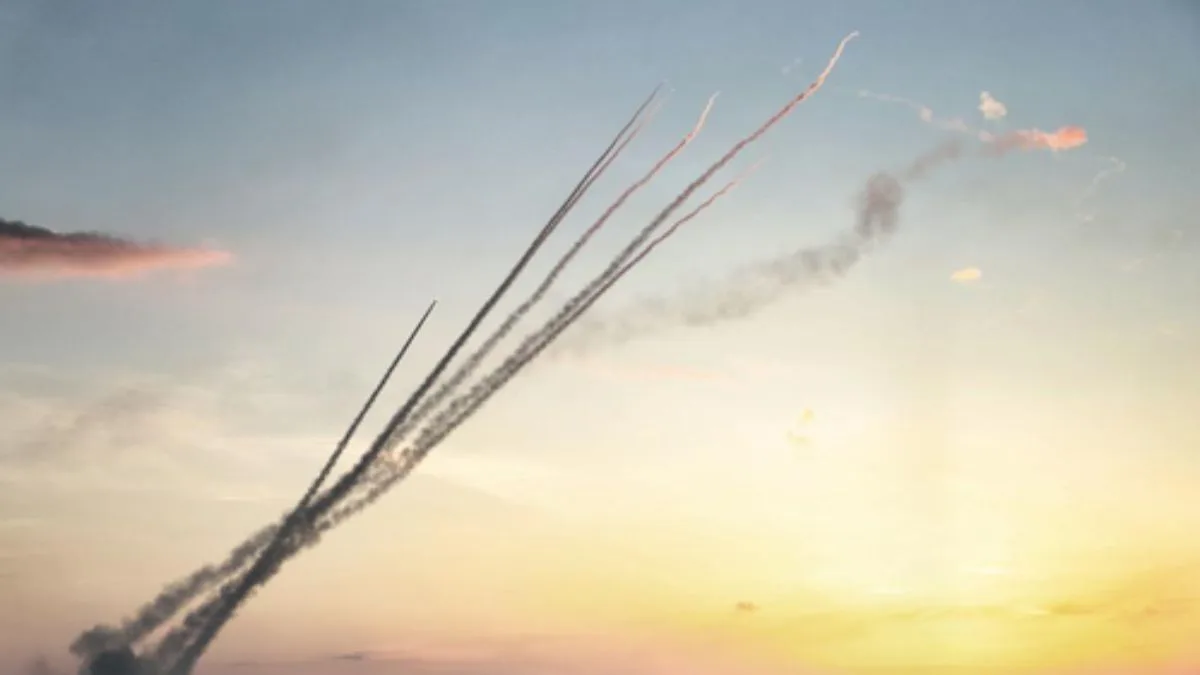
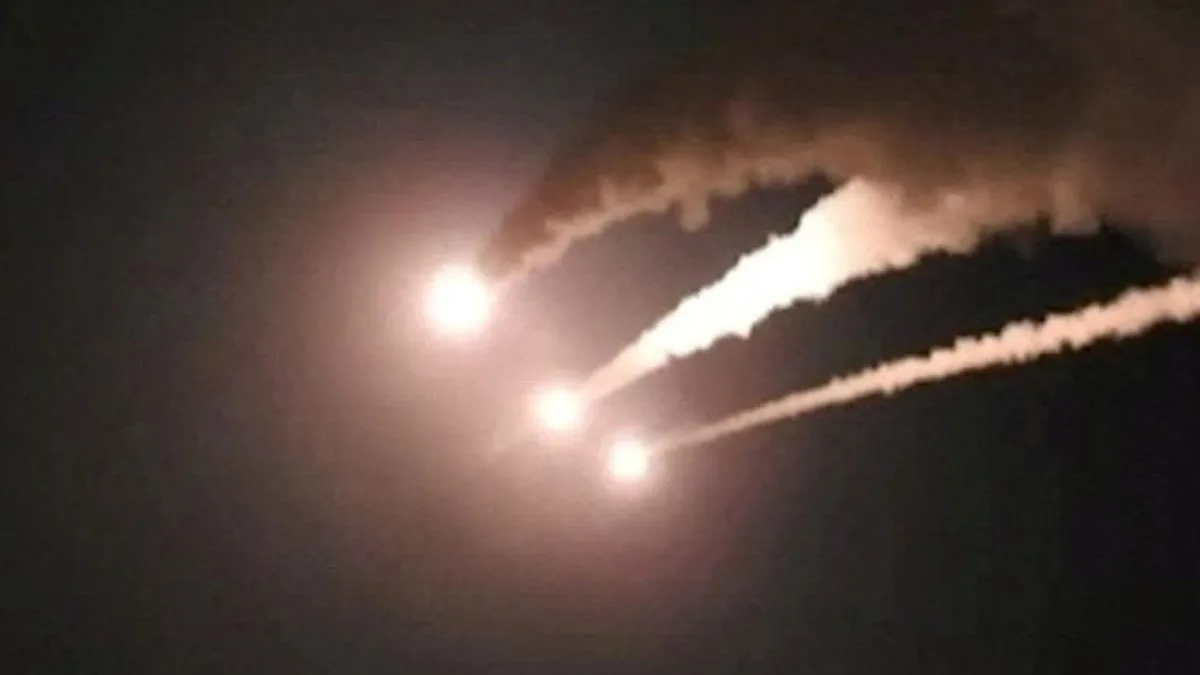
The United States launched military strikes against Iran on Tuesday after President Donald Trump said an American Army Apache helicopter was brought down while patrolling near the Strait of Hormuz, marking a significant escalation in an already volatile regional conflict.
The latest exchange comes as tensions in West Asia continue to intensify following days of military action involving Iran and Israel. With Washington now directly entering the confrontation, concerns are mounting over the possibility of a wider regional conflict centred around the strategically vital Strait of Hormuz.
Advertisement
Announcing the operation, the US Central Command (CENTCOM) said American forces began conducting “self-defence strikes” at 5 pm Eastern Time on the orders of the Commander in Chief. The military described the action as a “proportional response” to what it termed “unjustified Iranian aggression” after the reported downing of the helicopter.
In a post on Truth Social, Trump said he had been informed that Iranian forces shot down a “highly sophisticated Apache helicopter” during a patrol mission over the Strait of Hormuz.
The US President said both pilots survived the incident without injuries but insisted that Washington would respond.
“I have just been informed by our Great Military that last night the Iranians shot down one of our highly sophisticated Apache Helicopters while patrolling over the Strait of Hormuz. There were two pilots involved, both are safe and uninjured. Nevertheless, the United States must, of necessity, respond to this attack,” Trump wrote.
Soon after CENTCOM announced the operation, reports from Iranian media indicated multiple explosions in parts of southern Iran.
Explosions reported across southern Iran
According to Iran’s state-run and semi-official media outlets, explosions were heard in Bandar Abbas, Sirik, Jask, Minab and Qeshm Island in Hormozgan province.
Iranian media reports, cited by Xinhua, said air defence systems were activated in several locations as military activity intensified across the region. Reports also claimed that areas in southern Iran had come under attack by US fighter aircraft.
Iran’s state media outlet Press TV reported that the country’s armed forces were continuing military operations in response to what it described as ongoing enemy aggression. It added that stronger retaliation could follow if hostilities persist.
Iran warns US to leave the Persian Gulf
Iranian Foreign Minister Abbas Araghchi issued a sharp warning to Washington, saying foreign military forces operating near Iranian territory should leave the region if they wish to avoid further escalation.
In a post on X, Araghchi said Iran’s armed forces would not leave any attack or threat unanswered.
“Despite its defeats on the battlefield, the US opted to test our determination. Our Powerful Armed Forces will leave no attack or threat unanswered. Leave our region if you want to be safe. History of the Persian Gulf has many chapters on dire fates of intruding outsiders,” he said.
Earlier, Araghchi had also cautioned that foreign forces operating near the Strait of Hormuz remained exposed to risks arising from accidents, miscalculations or crossfire, and suggested that withdrawal from the region would be the safest course.
Regional tensions continue to rise
The US strikes unfolded against the backdrop of escalating exchanges between Iran and Israel, including reported attacks on Iranian petrochemical infrastructure and alleged strikes targeting Israeli military facilities.
Israeli military chief Eyal Zamir signalled that further operations against Iran remained possible, saying recent actions were only preparation for a more significant blow if required.
The renewed confrontation has also coincided with fresh Israeli attacks in southern Lebanon, adding another flashpoint to an already unstable regional security environment.